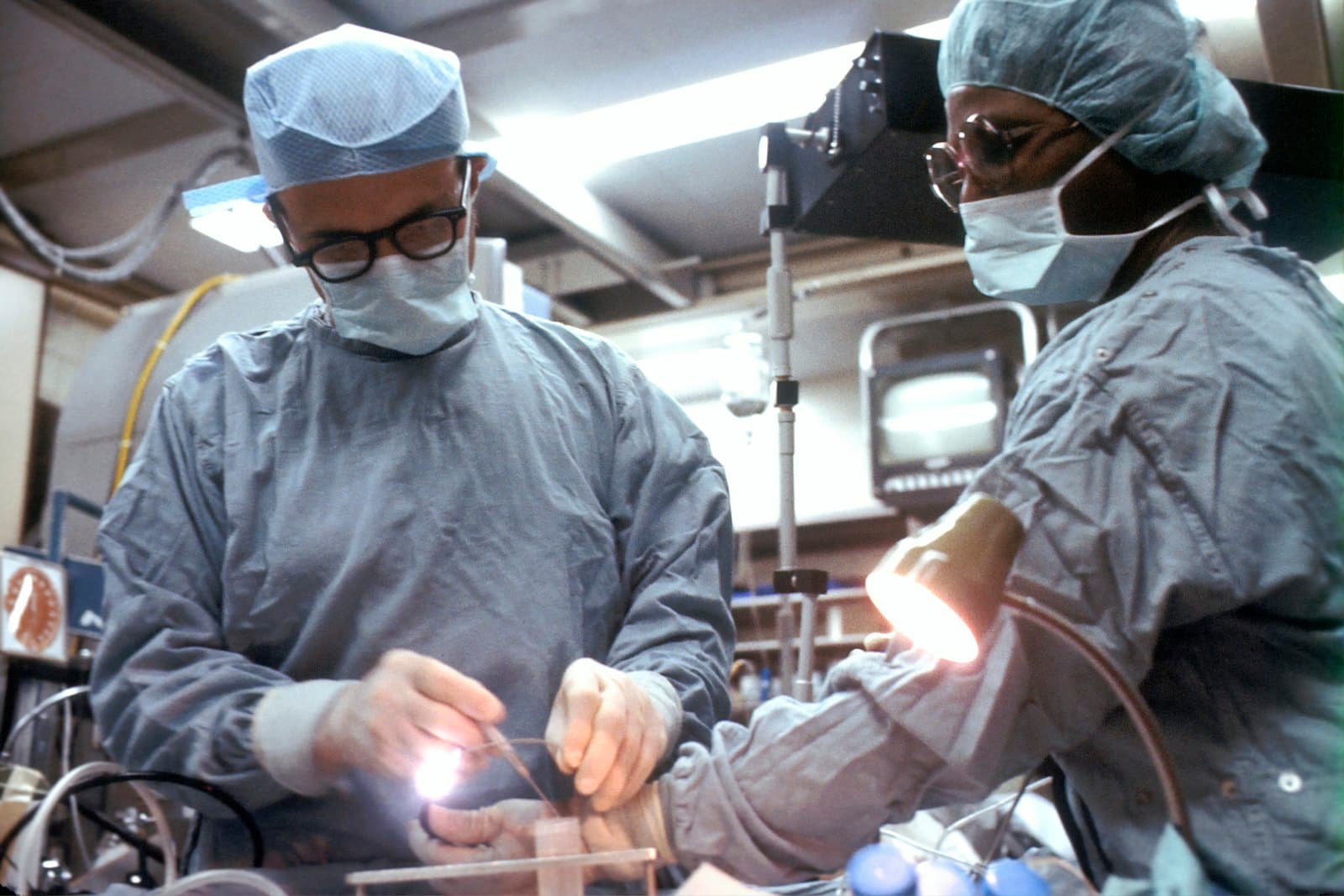

For older, frail, or high-surgical-risk patients with severe aortic stenosis, transcatheter aortic valve replacement (TAVR) offers a way to replace the valve without opening the chest: a single entry point in the femoral artery at the groin, a compressed artificial valve delivered to position and expanded in place — no sternum incision, no heart-lung machine. China's TAVR program began in 2010, the country now ranks among the world's leaders in annual procedure volume, domestically made valves hold roughly 80% of the local market, and the total cost is a fraction of the same operation in the West. But TAVR is not a one-size-fits-all "painless fix" — vascular access, annulus size and valve morphology all require strict evaluation.
This guide explains how TAVR works and who it suits, China's real position in this field, cost comparisons, the boundaries of risk, and the complete pathway for international patients from remote evaluation to surgery.
What TAVR Is
TAVR (transcatheter aortic valve replacement, also written TAVI in Europe) is a catheter-based operation for severe aortic stenosis. Via the femoral artery (occasionally the apex or subclavian artery), the doctor advances an artificial biological valve compressed inside a delivery system to the diseased aortic valve, positions and releases it under imaging guidance. The new valve immediately takes over opening and closing, pushing the diseased leaflets aside against the vessel wall.
Compared with conventional open-chest replacement (SAVR), the key differences are:
No sternum incision — usually just a puncture of a few millimeters at the groin;
No cardiopulmonary bypass support;
Smaller trauma and less bleeding; most patients stand up within 1–3 days and leave hospital in about 3–7 days;
Local anesthesia or light sedation rather than general anesthesia with open surgery.
For the elderly, patients with poor lung function, previous sternotomies or multiple comorbidities, avoiding the open chest is itself the decisive advantage.
Who Qualifies for TAVR
The eligible population keeps expanding as devices and evidence mature. The current mainstream indications are:
Severe aortic stenosis confirmed by echocardiography, with symptoms or impaired cardiac function;
Advanced age (typically above 70–75; guideline cut-offs differ);
High surgical risk or contraindication to open surgery: frailty, severe lung disease, multiple prior sternotomies, severe osteoporosis and so on;
Recent trials also support selective use in some intermediate- and even low-risk patients — a decision for the heart team (cardiac surgery plus cardiology plus imaging) jointly.
Conversely, younger low-surgical-risk patients who need concomitant bypass or treatment of other valves are usually still better served by conventional surgery. That call belongs to the heart team, not to any single specialist.
China's TAVR Landscape
China is one of the fastest-growing major TAVR markets, with public data to back it:
China's first TAVR was performed in 2010; by the national quality-monitoring system's count, about 9,600 procedures were done in 2023 — already approaching the number of surgical aortic valve replacements in the same period — and about 17,200 in 2024, still growing at double digits year on year.
Nine TAVR valve products are approved in China (about 25 are commercialized worldwide), most of them domestic: VenusA from Venus Medtech (the first domestically approved valve, 2017), Peijia Medical's Taurus series, MicroPort's VitaFlow series, Prizvalve (the first domestic balloon-expandable valve, approved 2024), and J-Valve for aortic regurgitation, among others. On the imported side, Edwards SAPIEN 3 was approved in 2020.
Domestic valves together hold about 80% of China's TAVR market and are the mainstay supply.
In November 2025, TAVR valves entered national pooled procurement for the first time, which should push device prices further down.
For international patients the implication is straightforward: at China's leading centers, TAVR is a routine operation with multiple device options, not scarce technology. We profile the main centers in our overview of China's top cardiovascular and thoracic surgeons.
Cost Comparison: China vs the United States
| Item | China (self-pay, incl. hospital stay) | United States (reference) |
|---|---|---|
| TAVR, total cost | Approx. ¥200,000–300,000 (US$28,000–42,000) | Averaging about US$69,000–70,000, common range about US$45,000–78,000; higher for the uninsured |
| Surgical aortic valve replacement (SAVR) | Approx. ¥60,000–150,000 (US$8,500–21,000) | Approx. US$70,000–200,000+ |
Notes:
The valve itself is the biggest cost driver in TAVR. Domestic valves cost far less than imported ones, and the national procurement starting in 2025 should keep pulling the total down;
The spread in Chinese prices comes mainly from valve brand (domestic vs imported), access route and length of stay;
US figures come from public cost studies and platform quotes; actual out-of-pocket amounts vary enormously with insurance status;
International patients should add pre-operative CT and angiographic workup, interpretation and companion costs. All figures are range estimates; the binding number is the hospital's quotation after evaluation.
TAVR or Open-Chest Replacement (SAVR): How to Choose
| Dimension | TAVR (transcatheter) | SAVR (surgical, open) |
|---|---|---|
| Access | Femoral artery puncture; no chest incision, usually no bypass machine | Sternotomy (or mini-incision); heart-lung machine |
| Trauma and recovery | Out of bed in 1–3 days, hospital stay about 3–7 days | Hospital stay 1–2 weeks, recovery 6–12 weeks |
| Main candidates | Older patients, high surgical risk or inoperable aortic stenosis; some intermediate/low-risk patients | Younger, low-surgical-risk patients; those needing concomitant bypass or multi-valve surgery |
| Cost in China | Approx. ¥200,000–300,000 | Approx. ¥60,000–150,000 |
| Valve durability evidence | Mid- to long-term data still accumulating | Decades of follow-up data |
In short: the younger the patient and the longer the expected lifespan, the more a repairable surgical option tends to be favored; the older and the higher the surgical risk, the clearer TAVR's benefit. Predominant regurgitation, bicuspid valves and other complex anatomy call for centers with more experience.
Other Minimally Invasive Options at a Glance
"Closing the chest" is not limited to TAVR — leading Chinese centers routinely offer:
Thoracoscopic / mini-incision valve surgery: mitral repair or replacement through several small ports on the side of the chest, without splitting the sternum. Fuwai Hospital and others have reported routine fully thoracoscopic valve work, including sutureless bioprostheses.
Atrial fibrillation ablation: catheter-based radiofrequency or cryoablation, a mature interventional cardiology procedure.
Transcatheter mitral valve repair (TEER): for severe mitral regurgitation in patients unfit for surgery, a clip device grasps the leaflets to reduce the leak. Abbott's MitraClip was approved in China in June 2020, and the domestic DragonFly transfemoral TEER system has also been approved and carries CE marking. This technique places very high demands on echo guidance and valve anatomy; we will not expand on it here.
Risks and Contraindications: Not for Everyone
TAVR is minimally invasive, not risk-free. The pre-operative CT and angiography must answer:
Access-vessel condition: whether the iliofemoral arteries are too small, calcified or occluded for the delivery sheath;
Annulus size and shape: annuli too large or too small for standard valves; bicuspid valves and heavy calcification raise release difficulty;
Coronary ostium height: a low take-off can be covered by the valve and needs planned management;
Known risks: paravalvular leak, conduction disturbances requiring a permanent pacemaker, stroke and vascular complications — rates vary by device and center.
In addition, patients with severe mitral disease needing concomitant treatment, those requiring bypass, or those whose main lesion is regurgitation may be better served surgically. To be honest: at the remote stage we can only screen preliminarily; the final verdict rests with the on-site heart team.
The Pathway for International Patients
As with open surgery, international TAVR patients should complete a remote imaging review before flying:
Document submission: echocardiography report plus chest/abdominal CTA images (mandatory for TAVR assessment) plus labs and a medication list;
Remote review: the target center's structural heart team decides whether the anatomy suits TAVR, and which valve and access route;
Visa and travel: the 240-hour visa-free transit does not cover medical treatment; an appropriate visa is required;
On-site evaluation: after admission the hospital repeats its own CT/angiography and heart-team discussion, then schedules the procedure;
Post-procedure and return flight: TAVR patients usually discharge in 3–7 days, and most can fly about a week after discharge (per medical advice).
From document submission to surgery, the whole cycle typically fits within 3–4 weeks, depending on how complete the records are.
Further Reading
Heart bypass and valve surgery in China: costs, hospitals and recovery timeline
More articles in this category on the Cardiac Care category page.
How to Get Started
If you or a family member has been diagnosed with severe aortic stenosis and told that open surgery is high-risk, sending us the echocardiogram and CTA is the fastest way to find out whether TAVR in China is feasible. MyMedVia coordinates with leading hospitals performing TAVR, arranges remote evaluation, handles visas and travel, and provides full medical interpreting with transparent cost quotes.
Contact us — we usually reply within one business day.
This article is general information and does not constitute medical advice. Whether TAVR or another procedure suits you should be decided by a heart team's in-person evaluation.